How Much Does Scaffolding Cost in 2026?
Scaffolding is usually priced as one figure covering design, delivery, erection, a set hire period and the dismantle. The size of that figure is driven by five things: how much of the building you need to reach, how high it goes, how long it stands, what the ground and the access are like, and whether the job needs a designed structure rather than a standard one.
That's the honest answer, and it's why nobody can give you a real price over the phone without seeing the building.
Below is what actually moves the number, so you can read a quote properly and compare two of them fairly.
What do published guides say scaffolding costs?
We price from a site visit rather than a rate card, so the figures below are not ours. They are the ranges national cost guides published for 2026, and they are worth reading because of how wide they are.
| Job | Typical published range |
|---|---|
| UK average, per square metre of elevation | £20 to £25 |
| One elevation, two storey terraced house | £450 to £900 |
| Full wrap, two storey semi detached | £650 to £2,600 |
| London and the south east | Commonly around 25 percent above the UK average |
Two things stand out.
The first is the spread. For a full wrap on the same type of house, published ranges run from £650 all the way to £2,600. That gap is not an error. It is what happens when a single figure is asked to cover different hire periods, different access and different parts of the country.
The second is the unit. Published guides do not always make clear whether a figure is for a week, a month or the whole hire, and the same number sometimes appears as both. If a national guide can blur that, a quote can too. Always check what period a price covers before you compare it to anything.
Treat those numbers as a sense of scale, not a budget. The only figure that means anything is one written against your building.
What is included in a scaffolding price?
A scaffolding quote isn't a hire charge with extras bolted on. It normally covers the whole cycle.
The initial visit, and where the structure needs it, the design and calculations. The delivery of materials to site. The erection itself. A set hire period, most commonly four or eight weeks. Inspections for as long as the scaffold stands. Then the dismantle and collection.
If a quote looks noticeably cheaper than another, the first thing to check is which of those are missing. The second is the hire period, because a cheaper price over four weeks isn't cheaper than a higher price over eight.
How is scaffolding measured?
Most scaffolding is priced from the area of elevation it covers and the number of lifts it needs, not from the floor area of the building.
A lift is one working level, and the taller the building the more of them it needs. Each lift adds material, labour and time, which is why height moves a price faster than width does.
Two other quantities matter. The number of returns, meaning every corner the scaffold has to turn, because a corner is designed rather than repeated. And the number of ties into the building, because a structure with many returns puts load through more ties than a flat elevation does.
What makes scaffolding more expensive?
How much of the building you need
A single elevation costs less than a full perimeter. That sounds obvious, but it catches people out, because some jobs only make sense as a perimeter even when the work looks local.
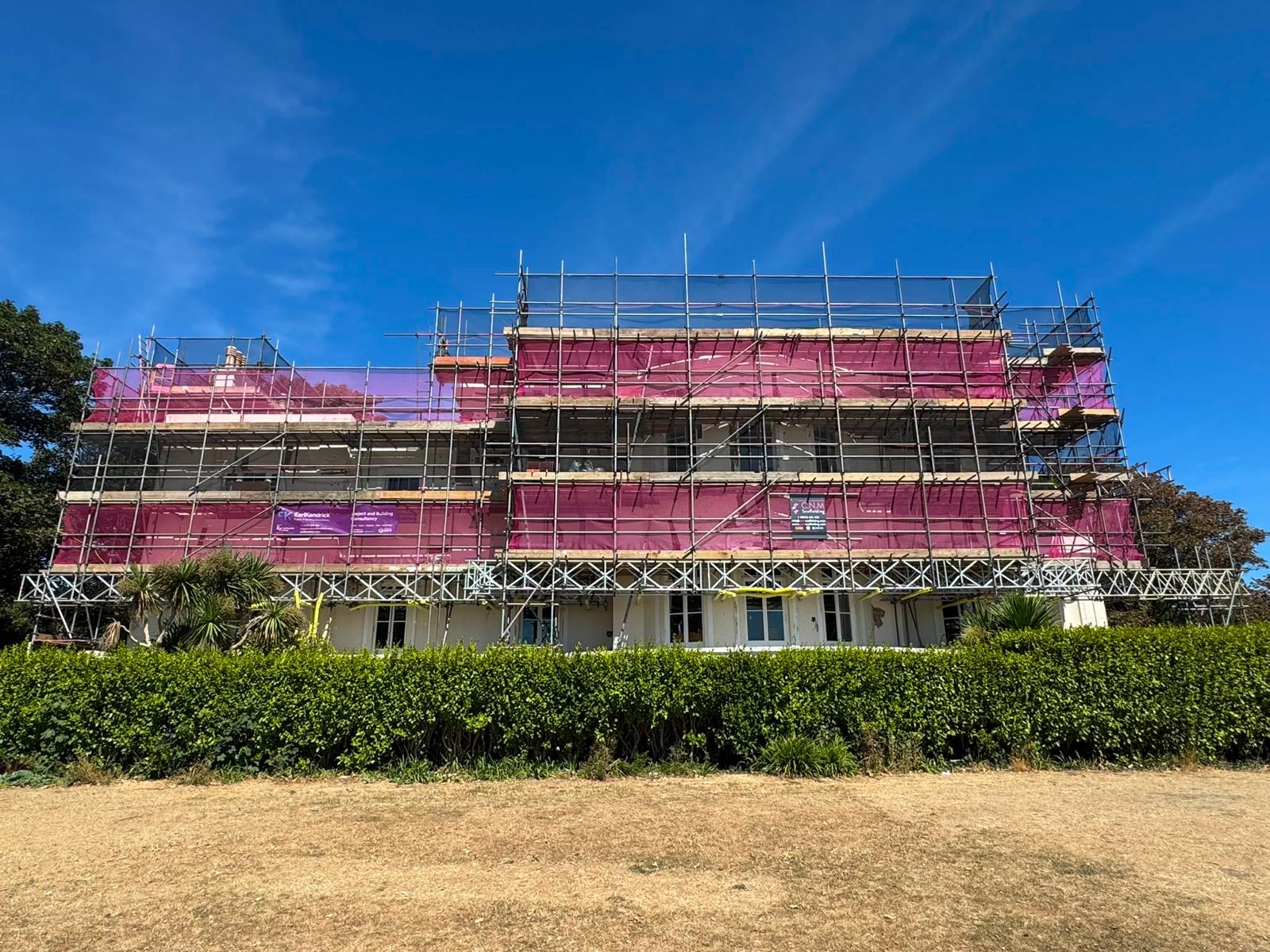
Parapets and rainwater goods are the clearest example. They run the whole way round a building, so there's no useful partial answer. On our Pavilion Buildings job in Brighton the works were parapet and guttering, which meant a full perimeter scaffold rather than one face.
How high it goes
Height adds lifts, and every lift adds material, labour and time. It also changes what the structure has to carry, because a taller scaffold takes more wind.
Sheeting compounds it. Debris netting and polythene are often necessary, but they turn a scaffold into something closer to a sail, so the structure has to be designed to carry that extra load rather than simply having the sheeting added.
How long it stands
Hire is usually the second largest part of the cost after erection. A scaffold that stands for eight weeks costs more than the same scaffold for four, and overruns are charged weekly.
A few real hire periods from our own completed projects:
| Project | Works | Hire period |
|---|---|---|
| Victoria Court, Horsham | Roofing and exterior works | 6 weeks |
| The Eardley, Worthing | Full facade repair and decoration | 8 weeks |
| Chichester University Chapel | Heritage restoration | 20 weeks |
The full set, and what drives the difference, is in our guide to how long scaffolding takes.
A domestic re-roof or decoration job commonly sits in the four to eight week band. Heritage and phased commercial programmes run for months, and the hire cost reflects that.
This is worth planning around. If the roofer can't start for three weeks, a scaffold going up early is three weeks of hire you're paying for and nobody is using.
What the ground and the access are like
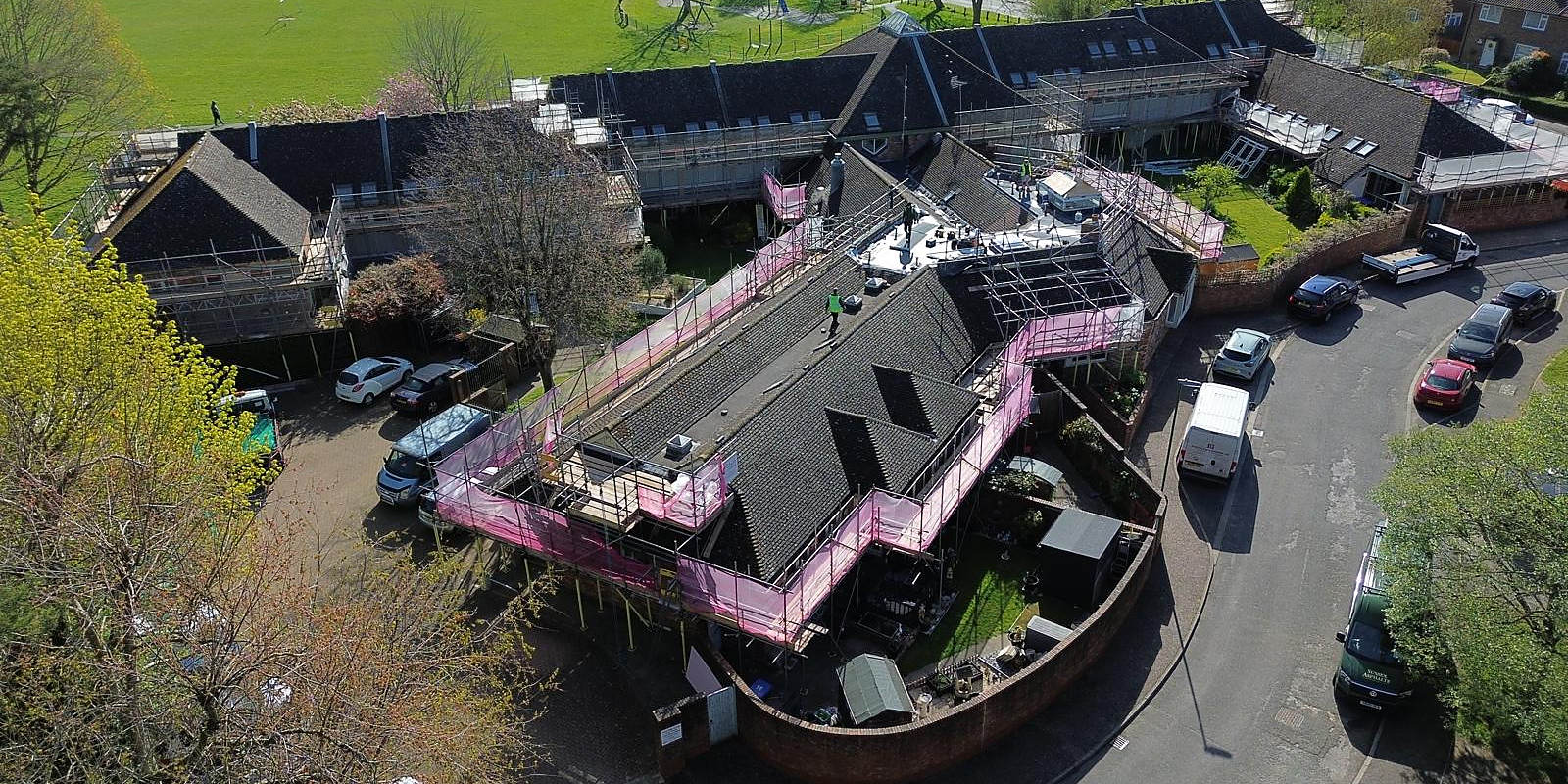
A scaffold standing on your own driveway is straightforward. A scaffold standing on a public pavement isn't. It needs a licence from the council, the footway has to stay open and safe, and every base standard needs guarding because the public walks past it at close quarters.
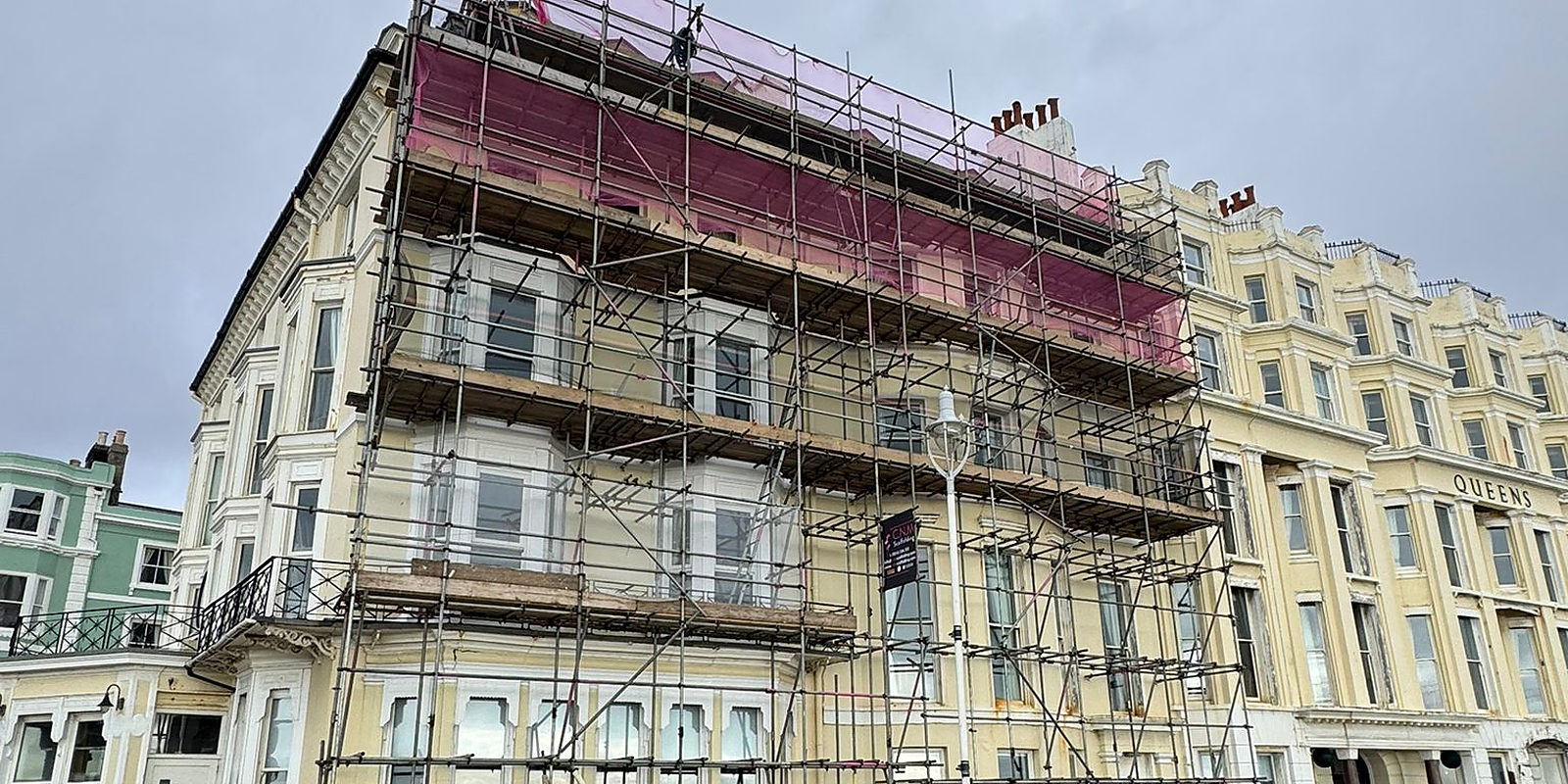
We've done three of those: The Queens Hotel and Pavilion Buildings in Brighton, and The Eardley on Worthing seafront. They cost more than the same scaffold in a back garden, and the reason is the pavement, not the scaffold.
Courtyards, lightwells and narrow side alleys do the same thing. At Pavilion Buildings the rear gutters sat above a courtyard with no ground to build from, so that scaffold was hung off the wall on shear plates and designed rather than simply erected.
Whether it needs designing
Most domestic scaffolds are standard configurations covered by industry guidance. Some aren't. Anything bridged over an opening, hung from a building, built over a lead roof, or carrying unusual loads needs drawings and calculations before anything goes up.
That's a real cost and a real safeguard. At East Preston Fire Station the scaffold was beamed over both appliance bay openings so the station could still answer a call at any hour, and that's a designed structure, not a standard one.
What else gets charged?
Three things come up often enough to be worth knowing about before you see them on an invoice.
Overrun. Most quotes carry a set hire period with a weekly rate after it. Ask for that rate at quote stage, not when you need it.
Alterations. If a trade needs a lift moved, a tie dropped or a section bridged part way through, that's a visit and a change to a structure that was signed off. It isn't free, and it shouldn't be done by anyone except the scaffolder.
Licence fees. On a pavement job the council charges for the licence and for any extension. Make sure the quote says who's applying and who's paying.
Is a cheaper scaffolding quote worth taking?
Sometimes. Price differences are often genuine, because firms carry different amounts of stock, work different distances from site and run different overheads.
What's worth checking before you decide:
| Check | Why it matters |
|---|---|
| The hire period | A four week quote and an eight week quote aren't comparable |
| The overrun rate | Ask the weekly figure before you need it |
| Who holds the licence | On a pavement job, somebody has to apply and pay |
| Whether inspections are included | A scaffold in use needs inspecting every seven days |
| Insurance and accreditation | Ask to see it rather than assume it |
| Whether a design is included | If the job needs one and the quote hasn't allowed for it, the price will move |
| What happens to your garden | Base plates, sole boards and sheeting protect what's underneath |
How do you get an accurate scaffolding quote?
Give the scaffolder enough to price properly without a wasted visit. The address, what the works are, which elevations the trades need, when the work starts and roughly how long it'll run. Photographs of the building and of the access help far more than a description does.
If there's anything unusual, say so early. A conservatory in the way, a lightwell, a flat roof the scaffold would have to cross, a neighbour's land, a shop below that stays open. Those are the things that change a price after a quote, and nobody enjoys that conversation.
Scaffolding costs in West Sussex, Hampshire and Sussex
We cover West Sussex, Brighton and Hove and south Hampshire, and we quote from our own site visit rather than from a calculator, because the things that move the price are the things you only see standing in front of the building.
If you want a figure for your job, send us the address and what the work is and we'll come and look.
Written by The C.N.M Scaffolding team
Scaffolding contractors, West Sussex, Hampshire and Sussex
This guide was written from our own completed jobs rather than from a template. All of our operatives are CISRS certified. Where a figure comes from somewhere other than our own records, the source is named on the page.
Need a price for your job?
Tell us the address and what the works are, and we will come and look. No charge for the visit.
More Scaffolding Advice
How Long Does It Take to Put Up Scaffolding?
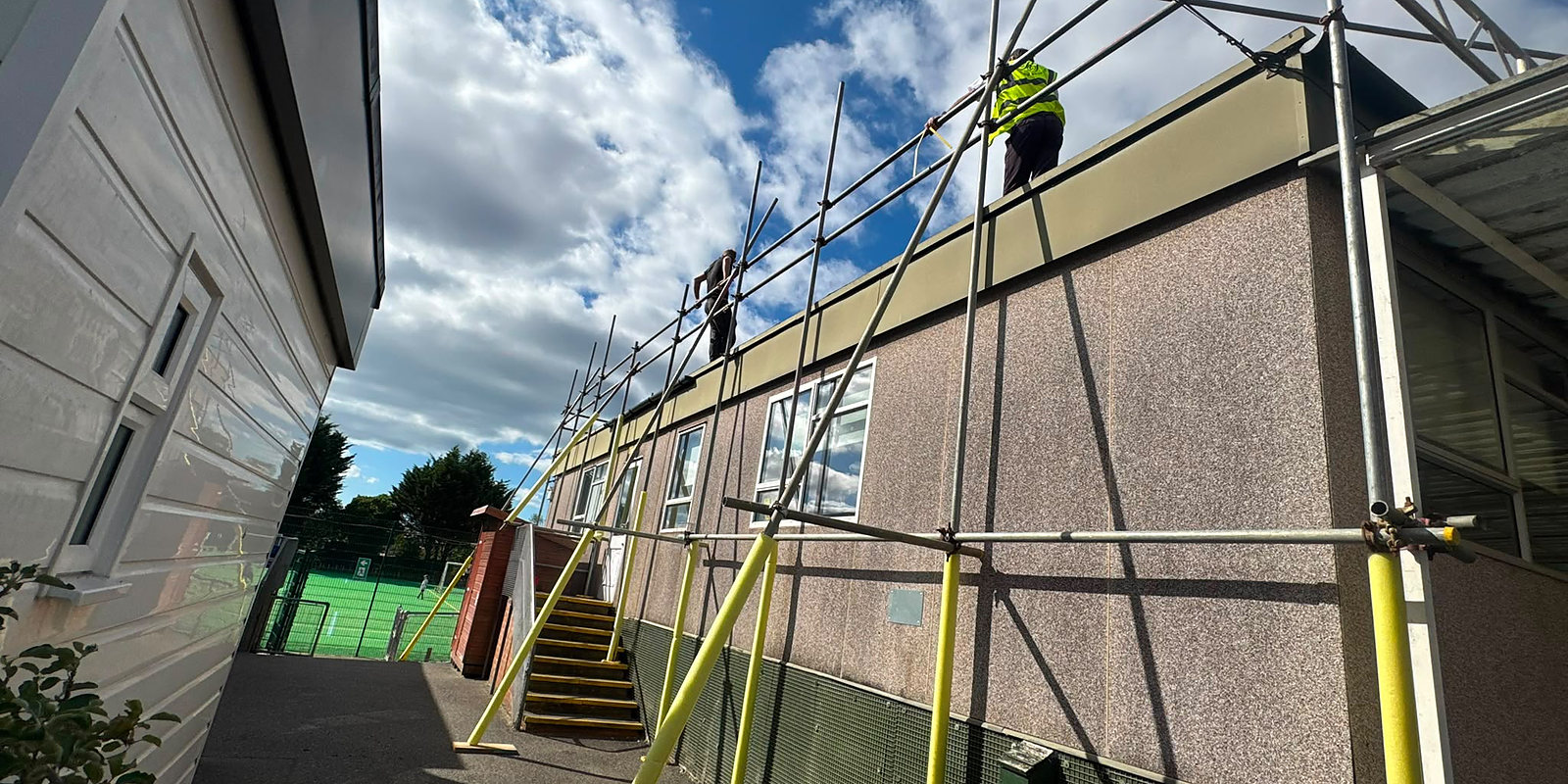
One elevation of a two storey semi is about half a day. But the question most people mean is how long the scaffold will be standing outside, and that answer is much longer.
Scaffold Inspection: The Rules and Who Is Responsible
A scaffold must be inspected before first use, then every seven days, and again after anything affecting its stability. The legal duty sits with the employer controlling the work.
Ready to Start Your Project?
Contact us today for a free, no-obligation quote